Anderson County Dog Registration Information
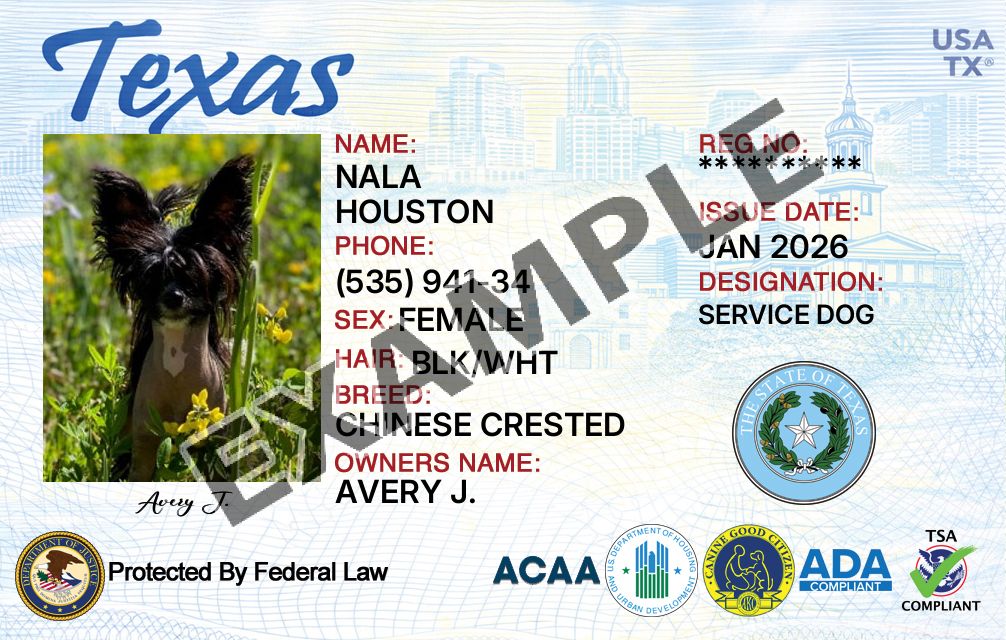
Service Dogs and Emotional Support Animals in Anderson, Texas
If you’re searching for where do i register my dog in Anderson County, Texas for my service dog or emotional support dog, the most important thing to know is this: dog licensing (when required) is usually handled locally—most often by a city’s animal control/animal services or, in some areas, by a county office involved with animal control or rabies enforcement. This page explains where to register a dog in Anderson County, Texas, what “registration” typically means, how rabies vaccination fits in, and why service dog legal status and emotional support animal (ESA) status are not the same thing as a dog license in Anderson County, Texas.
Where to Register or License Your Dog in Anderson County, Texas
Because licensing is often handled at the county or city level, the best place to start is with local animal control/animal services where you live (for example, within Palestine city limits versus outside city limits). Below are several official offices that are commonly involved in animal control, rabies enforcement, and local guidance on an animal control dog license Anderson County, Texas. Contact them to confirm: (1) whether a license is required for your address, (2) how to apply, and (3) what proof is needed (often a rabies certificate).
City of Palestine (Animal Control / Animal Services)
| Address | 504 N Queen Street, Palestine, TX 75801 |
|---|---|
| Phone | 903-731-8400 |
| Office Hours | Monday–Thursday 8:00 am–5:00 pm; Friday 9:00 am–5:00 pm |
| Not listed in cited official source |
Tip: Ask specifically about pet licensing requirements inside city limits and what to bring for a dog license (rabies certificate, ID, and proof of address). (cityofpalestinetx.com)
Anderson County Sheriff’s Office (County-Level Contact)
| Address | 1200 E. Lacy, Palestine, TX 75801 |
|---|---|
| Phone | 903-729-6068 |
| Not listed in cited official source | |
| Office Hours | Not listed in cited official source |
If you live outside a city’s animal control coverage, the county may be able to direct you to the appropriate enforcement or rabies-control contact for your area. (txsheriffs.org)
Anderson County Clerk (Courthouse Office Directory Listing)
| Address | 500 N Church St, Room 10, Palestine, TX 75801 |
|---|---|
| Phone | Not listed in cited official source |
| mstaples@co.anderson.tx.us | |
| Office Hours | Not listed in cited official source |
This office may not issue dog licenses, but it can be a useful official directory contact to route you to the correct county department if you’re unsure where to start. (txcourts.gov)
Overview of Dog Licensing in Anderson County, Texas
What “registering a dog” usually means
In many Texas communities, “registering” a dog refers to getting a local dog license (sometimes called a pet license) that links an owner’s contact information to the animal, often tied to proof of rabies vaccination. If you’re asking where to register a dog in Anderson County, Texas, the answer is typically: with the city you live in (animal control/animal services), or another local authority they designate.
Why you may not find a single countywide “license office”
Texas does not have a universal, one-size-fits-all statewide dog license program that every county administers the same way. Instead, pet licensing commonly happens at the local level. That’s why the best path is to start with your city animal control (if you are inside city limits) and then ask about county guidance if you are outside city limits.
Rabies vaccination is a cornerstone of compliance
Even when licensing rules differ by jurisdiction, rabies rules are more consistent: Texas requires rabies vaccination for dogs and cats by 4 months of age, administered by a licensed veterinarian, and owners should keep a signed rabies vaccination certificate. (dshs.texas.gov)
How Dog Licensing Works Locally in Anderson County, Texas
Step 1: Identify your jurisdiction (city limits vs. unincorporated county)
The process depends on where you live:
- Inside a city (example: Palestine): Start with city animal control/animal services or city hall. They can tell you whether a local pet license is required and how to apply. (cityofpalestinetx.com)
- Outside city limits (unincorporated Anderson County): Start by contacting a county-level office for direction (for example, the Sheriff’s Office contact listed above) and ask who handles animal control or rabies-related enforcement for your area. (txsheriffs.org)
Step 2: Prepare the most common documents
If a local license is required, most offices will ask for proof that your dog is currently vaccinated against rabies. Texas guidance emphasizes maintaining a veterinarian-signed rabies vaccination certificate. (dshs.texas.gov)
Step 3: Ask what “registration” includes (tag, record, renewal schedule)
Depending on the jurisdiction, registration may include a tag number, an annual renewal, or an online/in-person record. When you call, ask: (1) whether your dog needs a tag on the collar, (2) whether renewal is yearly, and (3) whether there are different fees for altered vs. unaltered pets.
Step 4: Understand the role of rabies enforcement and bite investigations
Local health departments may get involved when there is a bite or potential exposure. Guidance for handling bites and quarantine/testing procedures often involves the local health department working with veterinarians and the state lab. (achdonline.org)
If your main goal is “registration” for a service dog or emotional support dog, keep reading: those concepts are handled under different legal frameworks than a local animal control dog license Anderson County, Texas.
Service Dog Laws in Anderson County, Texas
A service dog is not created by a license or online “registration”
A dog license (local licensing/animal control) is about public health and identification (often linked to rabies vaccination). A service dog, by contrast, is defined by function: the dog is trained to do specific tasks for a person with a disability. Getting a dog license in Anderson County, Texas does not turn a pet into a service dog, and service dog status does not usually replace local licensing requirements.
Do you need to “register” a service dog with the county?
In most cases, there is no single official county registry that you must use to make a dog a service dog. However, you may still need to follow local animal rules, such as vaccination requirements and any local licensing/tag rules applicable to your address. That’s why it’s still important to contact local offices listed above for where to register a dog in Anderson County, Texas.
Rabies vaccination still matters for service dogs
Service dogs are not exempt from public health rules. Texas requires rabies vaccination by 4 months of age and encourages owners to carry a veterinarian-signed rabies certificate when needed. (dshs.texas.gov)
Emotional Support Animal Rules in Anderson County, Texas
An ESA is different from a service dog
An emotional support animal (ESA) generally provides comfort by its presence, but it is not the same as a task-trained service dog. ESAs are often relevant in certain housing contexts, but they do not automatically receive the same public-access rights as service dogs.
An ESA “registration” is not the same as local licensing
If you’re looking for “registration” for an ESA, be careful not to confuse: (1) local pet licensing (an animal control dog license Anderson County, Texas concept) with (2) paperwork you may keep for housing accommodations. Local offices can help with licensing and rabies compliance, but they typically do not issue “ESA certificates.”
Licensing and rabies rules still apply to ESAs
Even if your dog is an ESA, you should still follow the same local rules for vaccination and any required local licensing/tagging for where you live. Texas rabies requirements apply broadly to pets, including dogs that are ESAs. (dshs.texas.gov)
Frequently Asked Questions
Start with the city you live in (animal control/animal services or city hall) if you are inside city limits. For example, residents in Palestine can contact the City of Palestine at 504 N Queen Street, Palestine, TX 75801 by phone at 903-731-8400 to ask about licensing and requirements. (cityofpalestinetx.com) If you live outside city limits, contact a county-level office to confirm which agency covers animal control and licensing guidance for your area. (txsheriffs.org)
Usually no. A service dog is generally recognized based on disability-related need and training to perform tasks, not because of a county “registration.” However, a service dog may still need to comply with local rules such as rabies vaccination and any local pet licensing where you live.
Often, yes. Texas requires dogs and cats to be vaccinated against rabies by 4 months of age, administered by a licensed veterinarian, and owners should keep a signed rabies vaccination certificate. (dshs.texas.gov) Local jurisdictions may require you to present that certificate when applying for or renewing a license.
In many places, yes—because licensing is about identification and public health (including rabies compliance), not about the dog’s role. Confirm the exact rule with your local office (city animal control/animal services or the appropriate county contact) for your address.
Seek medical attention as appropriate and contact local authorities. Local health departments may investigate bite incidents and outline quarantine/testing steps, coordinating with veterinarians and the state rabies laboratory. (achdonline.org)
Disclaimer: Licensing requirements and office locations may change. Residents should verify details with their local animal services office within Anderson County, Texas.
What You May Need
- rabies vaccination proof
- identification
- proof of residency
- licensing fee
SEO Focus
This page is optimized for: where do i register my dog in Anderson County, Texas for my service dog or emotional support dog, including related phrases like dog license in Anderson County, Texas, animal control dog license Anderson County, Texas, and where to register a dog in Anderson County, Texas.
Register A Dog In Other Texas Counties
Select your county below to get started with your dog’s ID card. Requirements and license designs may vary by county, so choose your location to see the correct options and complete your pup’s registration.
- Andrews County Dog Registration
- Angelina County Dog Registration
- Aransas County Dog Registration
- Archer County Dog Registration
- Armstrong County Dog Registration
- Atascosa County Dog Registration
- Bailey County Dog Registration
- Bandera County Dog Registration
- Bastrop County Dog Registration
- Baylor County Dog Registration
- Bee County Dog Registration
- Bell County Dog Registration
- Bexar County Dog Registration
- Blanco County Dog Registration
- Borden County Dog Registration
- Bosque County Dog Registration
- Bowie County Dog Registration
- Brazoria County Dog Registration
- Brazos County Dog Registration
- Brewster County Dog Registration
- Briscoe County Dog Registration
- Brooks County Dog Registration
- Brown County Dog Registration
- Burleson County Dog Registration
- Burnet County Dog Registration
- Caldwell County Dog Registration
- Calhoun County Dog Registration
- Callahan County Dog Registration
- Cameron County Dog Registration
- Camp County Dog Registration
- Carson County Dog Registration
- Cass County Dog Registration
- Castro County Dog Registration
- Chambers County Dog Registration
- Cherokee County Dog Registration
- Childress County Dog Registration
- Clay County Dog Registration
- Cochran County Dog Registration
- Coke County Dog Registration
- Coleman County Dog Registration
- Collin County Dog Registration
- Collingsworth County Dog Registration
- Colorado County Dog Registration
- Comal County Dog Registration
- Comanche County Dog Registration
- Concho County Dog Registration
- Cooke County Dog Registration
- Coryell County Dog Registration
- Cottle County Dog Registration
- Crane County Dog Registration
- Crockett County Dog Registration
- Crosby County Dog Registration
- Culberson County Dog Registration
- Dallam County Dog Registration
- Dawson County Dog Registration
- Deaf Smith County Dog Registration
- Delta County Dog Registration
- Denton County Dog Registration
- DeWitt County Dog Registration
- Dickens County Dog Registration
- Dimmit County Dog Registration
- Donley County Dog Registration
- Duval County Dog Registration
- Eastland County Dog Registration
- Ector County Dog Registration
- Edwards County Dog Registration
- Ellis County Dog Registration
- Erath County Dog Registration
- Falls County Dog Registration
- Fannin County Dog Registration
- Fayette County Dog Registration
- Fisher County Dog Registration
- Floyd County Dog Registration
- Foard County Dog Registration
- Fort Bend County Dog Registration
- Franklin County Dog Registration
- Freestone County Dog Registration
- Frio County Dog Registration
- Gaines County Dog Registration
- Galveston County Dog Registration
- Garza County Dog Registration
- Gillespie County Dog Registration
- Glasscock County Dog Registration
- Goliad County Dog Registration
- Gonzales County Dog Registration
- Gray County Dog Registration
- Grayson County Dog Registration
- Gregg County Dog Registration
- Grimes County Dog Registration
- Guadalupe County Dog Registration
- Hale County Dog Registration
- Hall County Dog Registration
- Hamilton County Dog Registration
- Hansford County Dog Registration
- Hardeman County Dog Registration
- Hardin County Dog Registration
- Harris County Dog Registration
- Harrison County Dog Registration
- Hartley County Dog Registration
- Haskell County Dog Registration
- Hays County Dog Registration
- Hemphill County Dog Registration
- Henderson County Dog Registration
- Hidalgo County Dog Registration
- Hill County Dog Registration
- Hockley County Dog Registration
- Hood County Dog Registration
- Hopkins County Dog Registration
- Howard County Dog Registration
- Hudspeth County Dog Registration
- Hunt County Dog Registration
- Hutchinson County Dog Registration
- Irion County Dog Registration
- Jack County Dog Registration
- Jackson County Dog Registration
- Jasper County Dog Registration
- Jeff Davis County Dog Registration
- Jefferson County Dog Registration
- Jim Hogg County Dog Registration
- Jim Wells County Dog Registration
- Johnson County Dog Registration
- Jones County Dog Registration
- Karnes County Dog Registration
- Kaufman County Dog Registration
- Kendall County Dog Registration
- Kenedy County Dog Registration
- Kent County Dog Registration
- Kerr County Dog Registration
- Kimble County Dog Registration
- King County Dog Registration
- Kinney County Dog Registration
- Kleberg County Dog Registration
- Knox County Dog Registration
- Lamar County Dog Registration
- Lamb County Dog Registration
- Lampasas County Dog Registration
- LaSalle County Dog Registration
- Lavaca County Dog Registration
- Lee County Dog Registration
- Leon County Dog Registration
- Liberty County Dog Registration
- Limestone County Dog Registration
- Lipscomb County Dog Registration
- Live Oak County Dog Registration
- Llano County Dog Registration
- Loving County Dog Registration
- Lynn County Dog Registration
- Madison County Dog Registration
- Marion County Dog Registration
- Martin County Dog Registration
- Mason County Dog Registration
- Matagorda County Dog Registration
- Maverick County Dog Registration
- McCulloch County Dog Registration
- McLennan County Dog Registration
- McMullen County Dog Registration
- Medina County Dog Registration
- Menard County Dog Registration
- Midland County Dog Registration
- Milam County Dog Registration
- Mills County Dog Registration
- Mitchell County Dog Registration
- Montague County Dog Registration
- Montgomery County Dog Registration
- Moore County Dog Registration
- Morris County Dog Registration
- Motley County Dog Registration
- Nacogdoches County Dog Registration
- Navarro County Dog Registration
- Newton County Dog Registration
- Nolan County Dog Registration
- Nueces County Dog Registration
- Ochiltree County Dog Registration
- Oldham County Dog Registration
- Orange County Dog Registration
- Palo Pinto County Dog Registration
- Panola County Dog Registration
- Parker County Dog Registration
- Parmer County Dog Registration
- Pecos County Dog Registration
- Polk County Dog Registration
- Potter County Dog Registration
- Presidio County Dog Registration
- Rains County Dog Registration
- Randall County Dog Registration
- Reagan County Dog Registration
- Real County Dog Registration
- Red River County Dog Registration
- Reeves County Dog Registration
- Refugio County Dog Registration
- Roberts County Dog Registration
- Robertson County Dog Registration
- Rockwall County Dog Registration
- Runnels County Dog Registration
- Rusk County Dog Registration
- Sabine County Dog Registration
- San Augustine County Dog Registration
- San Jacinto County Dog Registration
- San Patricio County Dog Registration
- San Saba County Dog Registration
- Schleicher County Dog Registration
- Scurry County Dog Registration
- Shackelford County Dog Registration
- Shelby County Dog Registration
- Sherman County Dog Registration
- Smith County Dog Registration
- Somervell County Dog Registration
- Starr County Dog Registration
- Stephens County Dog Registration
- Sterling County Dog Registration
- Stonewall County Dog Registration
- Sutton County Dog Registration
- Swisher County Dog Registration
- Tarrant County Dog Registration
- Taylor County Dog Registration
- Terrell County Dog Registration
- Terry County Dog Registration
- Throckmorton County Dog Registration
- Titus County Dog Registration
- Tom Green County Dog Registration
- Travis County Dog Registration
- Trinity County Dog Registration
- Tyler County Dog Registration
- Upshur County Dog Registration
- Upton County Dog Registration
- Uvalde County Dog Registration
- Val Verde County Dog Registration
- Van Zandt County Dog Registration
- Victoria County Dog Registration
- Walker County Dog Registration
- Waller County Dog Registration
- Ward County Dog Registration
- Washington County Dog Registration
- Webb County Dog Registration
- Wharton County Dog Registration
- Wheeler County Dog Registration
- Wichita County Dog Registration
- Wilbarger County Dog Registration
- Willacy County Dog Registration
- Williamson County Dog Registration
- Wilson County Dog Registration
- Winkler County Dog Registration
- Wise County Dog Registration
- Wood County Dog Registration
- Yoakum County Dog Registration
- Young County Dog Registration
- Zapata County Dog Registration
- Zavala County Dog Registration